- info@g-aircon.com
- Open 24 hours
AC Water Leakage in Vadodara: 7 Common Causes & How to Fix Them
You switch on your AC and after some time notice water dripping from the indoor unit.
At first, it may be only a few drops.
Then the wall becomes wet. Water starts reaching the floor, furniture or electrical points nearby.
Water coming out of an AC’s outdoor drain pipe is normal. Water dripping from the indoor unit into your room usually is not.
Air conditioners naturally remove moisture from indoor air while cooling. That moisture condenses on the evaporator coil, collects in a drain pan and should flow outside through the condensate drain pipe. When that drainage process is interrupted, water may start leaking indoors. Carrier identifies clogged drain lines, frozen evaporator coils and damaged drain pans among the most common causes of AC water leakage.
If you are facing AC water leakage in Vadodara, here are seven likely causes and what should be done about them.
Why Does an AC Produce Water in the First Place?
Before understanding the leakage, it helps to understand why water is present inside an AC.
When warm indoor air passes across the cold evaporator coil, moisture in the air condenses into water droplets.
The AC is designed to collect this water in a drain pan and send it through a drain hose to an outlet outside the room.
So seeing water coming from the external drain pipe while the AC is running can be completely normal.
The problem begins when that water:
- Cannot reach the drain pipe
- Flows backwards
- Overflows from the drain tray
- Forms because the coil has frozen
- Escapes through an incorrectly installed drainage system
Daikin specifically recommends checking whether water is being discharged from the outdoor end of the drain hose when an indoor leakage problem occurs.
1. The AC Drain Pipe Is Blocked
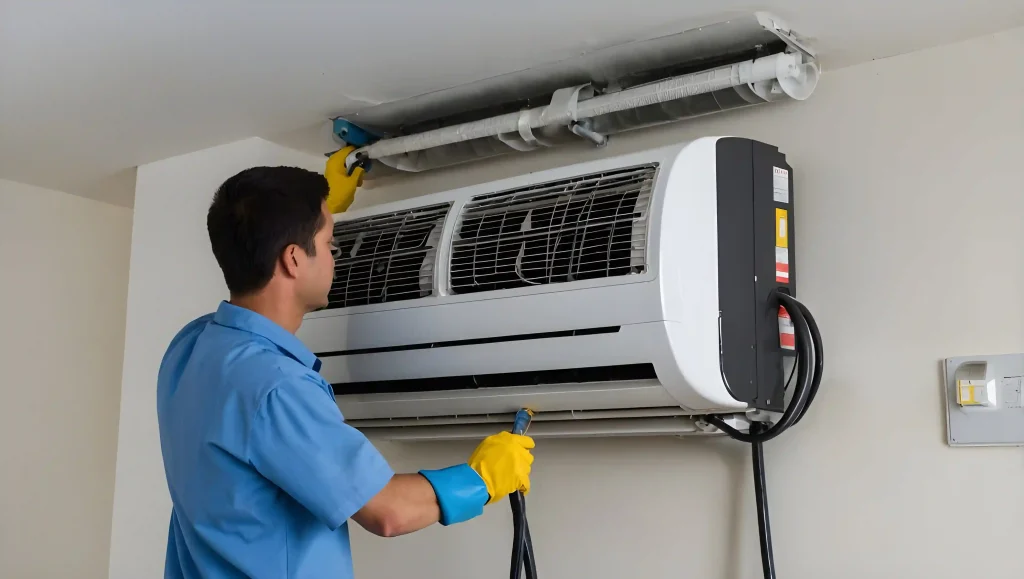
A blocked condensate drain pipe is one of the most common reasons an indoor AC begins dripping water.
Over time, the drain line can accumulate:
- Dust
- Dirt
- Sludge
- Algae-like buildup
- Debris
- Other contaminants carried by condensate water
When the pipe becomes partially or completely blocked, the water cannot drain outside properly.
It begins collecting in the drain pan until eventually it overflows from the indoor unit.
Carrier identifies a clogged condensate line as a major cause of water leakage from air-conditioning systems.
Signs of a blocked AC drain pipe
You may notice:
- Water dripping from one side of the indoor unit
- Water appearing after the AC has been running for some time
- Little or no water coming from the outdoor drain pipe
- Musty smell near the indoor unit
- Water collecting inside the drain tray
A technician can clean or flush the drain line and ensure that condensate flows freely outside.
2. Dirty AC Filters Can Eventually Cause Water Leakage
A dirty filter may seem like a cooling problem rather than a water-leakage problem.
But the two can be connected.
When filters become heavily clogged, airflow across the evaporator coil decreases.
Restricted airflow can cause the evaporator coil to become excessively cold and eventually freeze.
When that ice melts, the drain system may receive more water than it can handle, resulting in leakage or overflow. Carrier lists dirty filters and frozen evaporator coils among possible causes of mini-split water leakage.
Daikin also notes that blocked filters reduce airflow and increase the energy required to cool the room.
Check for:
- Very dusty filters
- Weak airflow
- Ice near the indoor coil
- Water leakage after switching the AC off
- Poor cooling alongside the leakage
Cleaning the accessible filter can sometimes help, but if ice has already developed or leakage continues, the AC should be professionally checked.
3. The Evaporator Coil Is Frozen
If you see ice inside the AC or around the copper pipe, the water leakage may actually be a secondary symptom.
An evaporator coil can freeze because of problems such as:
- Restricted airflow
- Dirty filters
- Refrigerant-related problems
- Certain mechanical faults
Once the AC is switched off or the ice begins melting, a large quantity of water may enter the drain tray at once.
Some of that water can overflow into the room.
Carrier recommends shutting down an AC when significant icing is visible because frozen-coil conditions can indicate airflow or refrigerant problems requiring diagnosis.
Don’t just remove the ice
Allowing the ice to melt may stop the immediate problem.
But it does not fix why the coil froze.
If your AC repeatedly freezes and then leaks water, the underlying cause needs to be diagnosed.
4. The Drain Pan May Be Dirty, Damaged or Misaligned
Beneath the evaporator coil is a tray that collects condensed water.
This is commonly called the drain pan or condensate pan.
Problems can occur when the pan is:
- Dirty
- Cracked
- Damaged
- Improperly positioned
- Overflowing
- Unable to direct water correctly into the drain pipe
Carrier lists a damaged condensate pan as another common source of AC water leakage.
Daikin also notes that dirt and foreign matter can accumulate around drain pans and contribute to leakage or unexpected shutdowns, which is why inspection and cleaning are important.
If the pan is physically damaged, cleaning alone will not solve the problem.
5. Incorrect AC Installation Can Cause Drainage Problems
Have you recently installed or shifted the AC and now it has started leaking?
The installation itself may need checking.
Condensate water relies largely on proper drainage and gravity.
If the indoor unit or drain pipe is installed incorrectly, water may not flow freely toward the outside outlet.
Possible installation-related issues include:
- Incorrect drain-pipe slope
- Indoor unit not properly levelled
- Drain hose bent or compressed
- Drain pipe rising upward where it should drain downward
- Poor connection between the indoor unit and drain line
Daikin’s technical troubleshooting documentation specifically identifies defective drain piping, including inappropriate upward slope, as a potential drainage-system fault.
This is why correct AC fitting matters for more than appearance.
A poorly positioned drainage system can create recurring leakage even when the AC itself is functioning correctly.
6. Low Refrigerant May Contribute to Coil Freezing and Leakage
Low refrigerant does not directly mean the AC suddenly starts producing extra water.
The relationship is indirect.
When refrigerant-related conditions cause the evaporator coil to become excessively cold, ice can form.
Once that ice melts, excess water may overflow from the indoor unit.
Carrier includes low refrigerant among potential reasons a mini-split may freeze and subsequently leak water.
If your AC has:
- Poor cooling
- Ice on the copper pipe
- Water leakage
- Long running cycles
the technician may need to assess both airflow and the refrigerant system.
But don’t assume every leaking AC needs gas.
As covered in our previous article, AC gas should be checked based on diagnosis rather than automatically refilled.
7. The Drain Hose May Be Bent, Loose or Disconnected
Sometimes the problem is much simpler.
The drain hose may have:
- Become loose
- Shifted from its connection
- Developed a bend
- Become pinched behind the unit
- Been accidentally moved
- Developed a blockage near the outlet
If water cannot follow its intended path, it may return toward the indoor unit or spill elsewhere.
Daikin recommends inspecting the outside drain-hose outlet and removing obstructions where possible when water is not draining normally.
A technician can inspect the complete drain path if the visible outlet looks normal but leakage continues.
Why Does My AC Leak More Water During Humid Weather?
An AC doesn’t only reduce room temperature.
It also removes moisture from indoor air.
When the air contains more moisture, more condensation can naturally form on the evaporator coil.
That means the drainage system needs to handle a greater volume of condensate.
A properly functioning drain system should still send this water outside.
So higher humidity may increase the amount of condensate, but it should not cause water to pour from the indoor unit.
If leakage becomes noticeable during humid or rainy periods, an existing partial drain blockage or drainage problem may become more obvious.
Is Water Coming From the Outdoor AC Unit Normal?
Sometimes, yes.
People often confuse normal condensation with a water-leakage problem.
Usually normal:
Water coming from the designated drain pipe outside while the AC is cooling.
Needs checking:
Water dripping from:
- Indoor AC unit
- Wall below the AC
- Front panel
- Side of the indoor unit
- Electrical section
- Unexpected location around the outdoor unit
For an indoor leak, Daikin recommends stopping use because uncontrolled water can damage floors, walls and household furnishings.
Can You Continue Using an AC That Is Leaking Water?
It is better not to keep operating an AC with an active indoor water leak.
The water itself can damage:
- Wall paint
- False ceilings
- Furniture
- Wooden flooring
- Electrical fittings
- Electronics placed below the AC
Depending on where the leakage occurs, moisture may also reach internal electrical components.
Carrier advises turning off an AC with an unresolved water leak because continued operation may worsen the leak or create additional water damage.
If water is dripping near an electrical socket, switch or appliance, treat the issue more urgently.
What Can You Check Before Calling an AC Technician?
You can safely perform a few basic checks without opening technical parts of the AC.
1. Check the air filter
If it is visibly covered in dust, clean it according to the manufacturer’s instructions.
2. Look at the outdoor drain pipe
Check whether water is flowing from the drain outlet while the AC operates.
3. Look for visible ice
Check the accessible copper piping and indoor-unit area.
4. Check whether the indoor unit appears tilted
If leakage began immediately after installation or shifting, installation alignment may need attention.
5. Switch the AC off if water is leaking heavily
Place a cloth or container underneath temporarily to protect the wall and floor until the problem can be inspected.
Do not open refrigerant, electrical or internal drainage components unless you are trained to work on AC systems.
AC Water Leakage Repair: What Will a Technician Check?
A proper inspection should identify where the water is coming from and why.
Depending on the symptoms, a technician may inspect:
Drain pipe
To determine whether dirt or blockage is restricting water flow.
Drain pan
To check for overflow, damage or improper positioning.
Air filters and evaporator coil
To determine whether restricted airflow or dirt is contributing to freezing.
Refrigerant system
If coil freezing and poor cooling suggest a possible refrigerant problem.
Indoor-unit installation
To check alignment and drain-pipe slope.
Drain hose connection
To identify loose, bent or damaged sections.
The repair should then address the cause instead of simply wiping away the water.
Drain Cleaning vs Complete AC Service
If the problem is only a blocked drain pipe, cleaning the drainage system may be enough.
However, leakage accompanied by:
- Poor cooling
- Dirty coils
- Weak airflow
- Heavy dust
- Ice formation
- Bad smell
may indicate that the AC requires more comprehensive servicing.
G-Aircon provides AC repair and servicing in Vadodara, including troubleshooting for issues such as poor cooling and water-related AC problems.
For heavily dirty indoor systems, professional deep cleaning may also be recommended depending on the condition of the AC.
Why Does My AC Leak Immediately After Servicing?
If water leakage starts soon after service, don’t automatically assume the AC has developed a new major fault.
Possible reasons include:
- Drain pipe not properly reconnected
- Drain pan moved during cleaning
- Dirt entering the drain line
- Indoor unit not reassembled correctly
- Existing drainage blockage not fully cleared
The technician should recheck the drainage path rather than simply adding refrigerant or performing unrelated repairs.
Why Does My AC Leak Only After Several Hours?
This pattern can provide a useful clue.
If the AC operates normally at first and begins leaking only later, possible explanations include:
- Slowly filling blocked drain tray
- Partial drain blockage
- Progressive evaporator icing
- Ice melting after operating conditions change
- Drain system unable to handle condensate properly
A completely blocked drain may cause leakage sooner, while a partially restricted drain may take longer to overflow.
The timing helps a technician understand the likely cause, but inspection is still necessary.
AC Water Leakage Repair in Karelibaug, Sama, Nizampura & Fatehgunj
For people searching for AC water leakage repair near me, getting an on-site inspection is important because the problem may involve the indoor unit, drain line, installation or refrigerant system.
G-Aircon provides AC repair, servicing, installation and maintenance services across Vadodara.
Customers requiring AC repair around areas such as:
- Karelibaug
- Sama
- Nizampura
- Fatehgunj
- Harni
- New VIP Road
- and nearby Vadodara areas
can contact G-Aircon for inspection and repair.
The company’s website lists 24-hour availability for its Vadodara AC services.
How Can You Reduce AC Water Leakage Problems?
Not every breakdown can be prevented, but some simple habits can reduce drainage-related problems.
Keep AC Filters Clean
Heavily blocked filters can restrict airflow and contribute to evaporator freezing.
Don’t Ignore Weak Cooling
Weak cooling combined with water leakage or ice formation can indicate a problem that needs inspection.
Get the Drain Line Checked During Servicing
A partially blocked pipe may eventually become completely clogged.
Use Proper Installation for New or Shifted ACs
Drain-pipe slope and indoor-unit positioning matter.
Don’t Let Indoor Leakage Continue for Days
A small drip can eventually damage the wall, paint and items positioned below the unit.
Don’t Confuse the Symptom With the Cause
If water is dripping from your indoor AC, the leakage itself is only the symptom.
The actual problem could be:
Blocked drain pipe → water cannot escape
Dirty filter → restricted airflow → frozen coil → melting water
Low refrigerant → frozen coil → leakage
Damaged drain pan → water escapes
Poor installation → water cannot drain correctly
Loose drain hose → water flows into the room
That is why simply cleaning the floor and restarting the AC is not a repair.
The source of the leakage needs to be identified.
If your AC is leaking water in Vadodara, G-Aircon provides AC repair and servicing for different AC brands and models across the city.
Contact G-Aircon:
+91 95589 01793
Vadodara, Gujarat.
About Us
Welcome to G – Aircon, your trusted partner for all your air conditioning needs. With years of experience and a commitment to excellence, we are proud to be a leading provider of AC services in Vadodara.
Links
Our Services
Contact Info
- D - 18, Sarawati Nagar, B/H Roses Garden, Old Chhani Road, Vadodara - 390002
- Sameer Khan: +91 95589 01793
- info@g-aircon.com