- info@g-aircon.com
- Open 24 hours
Split AC Deep Cleaning in Vadodara: When Normal AC Service Is Not Enough
You clean your AC filters.
The AC is also serviced occasionally.
Yet the airflow still feels weak, cooling takes longer than before, or an unpleasant smell returns whenever you switch the unit on.
At this point, another quick filter cleaning may not solve the problem.
Dust does not accumulate only on the visible AC filter. Over months of operation, dirt can reach deeper components such as the evaporator coil, blower, fins, drain pan and outdoor condenser. When these components become heavily soiled, more thorough cleaning may be required.
Daikin explains that blocked filters reduce airflow while increasing the electricity required to cool a room. Carrier similarly recommends inspection and cleaning of evaporator coils, drain pans and condensate drains when maintaining an AC system.
For customers looking for AC deep cleaning in Vadodara, understanding the difference between routine servicing and deep cleaning can help determine what your AC actually needs.
What Is AC Deep Cleaning?
AC deep cleaning goes beyond wiping the outer panel and washing the removable filter.
Depending on the condition and design of the air conditioner, professional deep cleaning may involve cleaning areas such as:
- Air filters
- Evaporator coil
- Cooling fins
- Blower wheel
- Drain pan
- Condensate drain
- Indoor-unit surfaces
- Outdoor condenser coil
- Accessible dirt and debris around the unit
The objective is to remove accumulated dirt from components involved in airflow, heat transfer and drainage.
Carrier’s maintenance guidance recommends inspecting evaporator coils and the condensate drain system as part of coil maintenance, particularly when dirt has built up beyond what normal filter cleaning can address.
G-Aircon offers jet pump AC cleaning in Vadodara, describing it as a deeper cleaning service intended to flush accumulated dirt from coils and fins.
Normal AC Service vs Deep Cleaning: What’s the Difference?
The terms are sometimes used interchangeably, but they should not necessarily mean the same thing.
Normal AC Servicing
A standard service may typically focus on routine maintenance such as:
- Cleaning filters
- Checking basic cooling performance
- Inspecting the indoor and outdoor unit
- Checking drainage
- Checking refrigerant-related conditions where required
- General inspection
For an AC that is reasonably clean and working properly, routine servicing may be enough.
AC Deep Cleaning
Deep cleaning is more relevant when dirt has accumulated deeper inside the system.
It may involve more thorough attention to:
- Evaporator coil
- Blower
- Indoor fins
- Drain tray
- Condensate path
- Outdoor condenser
G-Aircon distinguishes its regular servicing from jet pump AC cleaning, which it promotes for more stubborn buildup around coils and internal components.
The important point is that every AC does not automatically need aggressive deep cleaning every time it is serviced.
The condition of the unit should determine the type of service required.
7 Signs Your Split AC May Need Deep Cleaning
1. Airflow Has Become Noticeably Weak
Your AC may still produce cold air, but very little air seems to come from the indoor unit.
A clogged filter should be checked first.
However, if the filter is clean and airflow remains weak, dirt may have accumulated deeper inside the unit.
The blower and evaporator area both play a role in moving air through the system.
A heavily contaminated cooling coil can restrict airflow and reduce effective heat transfer.
Daikin notes that filter obstruction reduces the amount of intake air available to the AC.
If routine filter cleaning does not restore normal airflow, deeper inspection may be useful.
2. Your AC Takes Much Longer to Cool the Room
Perhaps your bedroom previously became comfortable quickly.
Now the AC continues running, but cooling feels slow.
There are several possible reasons, including:
- Dirty filters
- Dirty coils
- Refrigerant-related problems
- Outdoor-unit problems
- Compressor faults
- Increased room heat load
If the system is heavily dirty, cleaning may improve heat-transfer conditions.
Carrier explains that accumulated dirt on evaporator or condenser coils should be removed using appropriate coil-cleaning methods.
However, deep cleaning is not a cure for every cooling problem.
If the AC remains weak after cleaning, the technician should investigate other possible faults.
3. A Bad or Musty Smell Comes From the Indoor Unit
An AC should not make the room smell unpleasant every time it starts.
Persistent odour can be associated with:
- Dirty filters
- Moisture
- Dirty drain pan
- Drainage problems
- Dirt around internal components
Simply spraying perfume or room freshener near the AC only masks the smell.
The underlying source needs to be cleaned or repaired.
Carrier recommends inspecting the drain pan and condensate drain while servicing the evaporator coil, because these areas are part of the moisture-removal system.
If a smell repeatedly returns after simple filter cleaning, a more complete indoor-unit cleaning may be appropriate.
4. Dust Comes Out When You Switch the AC On
If you notice visible dust particles or dirt around the air outlet whenever the AC starts, the inside of the unit may require attention.
The filter catches a large amount of dust, but it does not necessarily prevent every particle from reaching internal areas.
Over time, dirt can collect around:
- Louvers
- Blower
- Coil surfaces
- Internal housing
Cleaning only the front filter may therefore leave much of that buildup untouched.
This becomes particularly relevant for ACs installed near roads, construction activity or other dusty environments.
5. Water Leakage Keeps Returning
Water leakage can have several causes, as discussed in our previous G-Aircon blog.
One possible cause is a dirty or blocked condensate drainage system.
Dirt can accumulate in the drain pan and drain line until water can no longer flow outside normally.
Carrier recommends checking both the drain pan and condensate drain when inspecting an evaporator coil.
If your AC repeatedly leaks water despite temporary drain cleaning, a more complete inspection may be needed to determine whether:
- Drain pan is dirty
- Drain line is partially blocked
- Evaporator is freezing
- Installation slope is incorrect
- Another technical issue is present
Deep cleaning can help when accumulated dirt is the cause, but it will not correct installation or refrigerant faults.
6. The Indoor Coil Is Visibly Covered With Dirt
The evaporator coil is responsible for absorbing heat from indoor air.
Air needs to move across this coil effectively.
When dirt accumulates heavily across the coil and fins, heat transfer can become less effective.
Carrier recommends using cleaning products specifically intended for AC evaporator and condenser coils rather than arbitrary household chemicals.
This is one reason heavily contaminated coils are better handled professionally.
The fins are delicate and can be damaged by incorrect tools, harsh chemicals or careless cleaning.
7. Your AC Has Not Had Thorough Cleaning for a Long Time
An AC can continue operating even while internal dirt gradually accumulates.
That means the absence of a breakdown does not necessarily mean the unit is clean.
If the AC has:
- Been used heavily for several seasons
- Operated in a dusty environment
- Had only filter cleaning
- Developed reduced airflow
- Started smelling
- Become noticeably slower at cooling
it may be worth having the internal components inspected.
That does not mean every old AC requires jet cleaning automatically.
The technician should first determine how dirty the unit actually is.
What Is Jet Pump AC Cleaning?
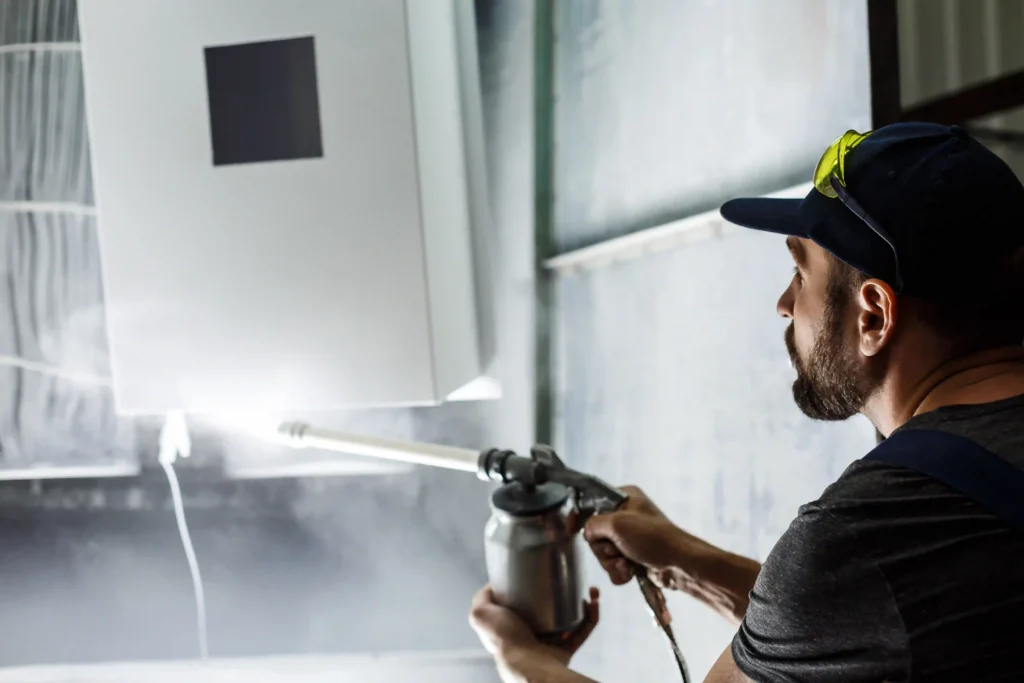
Jet pump cleaning uses water under controlled pressure to remove stubborn dirt from selected AC components.
G-Aircon describes its Jet Pump AC Service in Vadodara as deep cleaning intended to remove accumulated dirt and debris from coils and fins.
For a split AC indoor unit, the technician should protect surrounding walls, electronics and electrical sections before cleaning.
A collection cover or cleaning bag may be positioned around the indoor unit so dirty water can be directed away safely.
The exact process will vary according to the AC model and condition.
Is High-Pressure Water Safe for an AC?
This requires some care.
More pressure does not automatically mean better cleaning.
AC coil fins are thin and delicate. Excessive or incorrectly directed pressure can bend them or damage other components.
Carrier recommends appropriate coil-cleaning techniques and products rather than uncontrolled cleaning.
So professional jet cleaning should mean controlled cleaning suitable for the component, not simply pointing the strongest possible water jet at the AC.
This is also why attempting deep pressure cleaning yourself can cause more harm than good.
Which Parts Are Usually Cleaned During Split AC Deep Cleaning?
The exact procedure depends on the AC, but technicians may inspect and clean the following areas.
Air Filters
Filters are removed and cleaned separately.
Daikin recommends regular filter cleaning because blocked filters reduce airflow and increase cooling energy requirements.
Evaporator Coil
The indoor coil may collect fine dust over time.
Cleaning restores a cleaner surface for airflow and heat transfer.
Blower
The cylindrical blower behind the evaporator helps distribute air into the room.
Dirt accumulating on the blower blades may interfere with airflow.
Drain Pan
Water removed from indoor air collects in the drain pan before leaving through the drain pipe.
The pan should remain sufficiently clean for proper drainage.
Drain Pipe
Accumulated dirt may partially or completely restrict the condensate drain.
Outdoor Condenser
The outdoor coil releases heat absorbed from inside the room.
Dirt and debris around this unit can interfere with airflow and heat transfer.
Carrier advises keeping condenser coils clean and free from debris.
What Deep Cleaning Cannot Fix
This is important because deep cleaning is sometimes marketed as though it solves every AC problem.
It does not.
Deep cleaning will not automatically repair:
- Refrigerant leakage
- Failed compressor
- Damaged capacitor
- Faulty PCB
- Broken sensor
- Motor failure
- Incorrect AC capacity
- Serious electrical faults
- Improper installation
- Damaged refrigerant piping
For example, if your AC is not cooling because it has a refrigerant leak, cleaning the coil may improve cleanliness but will not repair the leak.
A technician should diagnose the problem before recommending the service.
Does Deep Cleaning Improve AC Cooling?
It can, if dirt is restricting airflow or reducing heat-transfer performance.
Imagine an evaporator coil covered with accumulated dust.
Removing that dirt can allow air to move more freely across the clean coil.
But if the AC was already clean, deep cleaning will not magically increase its original cooling capacity.
Similarly, if poor cooling is being caused by:
low refrigerant → repair the refrigerant problem
compressor issue → diagnose the compressor
incorrect AC size → cleaning cannot change capacity
dirty coil → cleaning may help
The service should match the fault.
Can AC Deep Cleaning Reduce Electricity Consumption?
Potentially, when dirt has caused the system to work harder.
Daikin states that filter obstruction reduces airflow and increases the electricity required for cooling.
Cleaning dirty heat-transfer surfaces can also help restore normal operating conditions.
However, no technician can responsibly promise that:
“Deep cleaning will reduce your electricity bill by exactly 20%, 30% or 40%.”
Actual power consumption depends on:
- AC model
- Temperature setting
- Room heat load
- Daily usage
- Outdoor temperature
- Equipment condition
- Coil and filter cleanliness
- Refrigerant condition
Deep cleaning is maintenance, not a guaranteed electricity-bill formula.
How Often Does a Split AC Need Deep Cleaning?
There is no honest fixed schedule that applies to every home.
An AC used eight hours every day in a dusty location will not become dirty at the same rate as an AC used occasionally in a cleaner indoor environment.
Factors include:
- Number of daily operating hours
- Dust around the property
- Construction nearby
- Road traffic
- Pets
- Smoking indoors
- Humidity
- Previous servicing
- AC design
Filters usually require attention much more frequently than deep internal cleaning. For example, Daikin’s general maintenance guidance recommends checking and cleaning filters regularly and gives a two-week cleaning recommendation for relevant models.
Deep cleaning should instead be based on inspection and actual buildup.
Should You Deep Clean Your AC Before Summer?
Before a period of heavy AC use is a sensible time to inspect the system.
If the unit has remained unused for months or operated throughout the previous season without thorough servicing, checking its filters, coils and drainage before heavy use can prevent unpleasant surprises.
The aim is to identify problems before the AC is required to operate for long hours every day.
However, if the unit is already clean and functioning correctly, an unnecessarily aggressive cleaning procedure is not automatically better.
Can You Deep Clean a Split AC Yourself?
Basic maintenance and professional deep cleaning should be separated.
A homeowner can generally perform simple manufacturer-approved tasks such as:
- Cleaning accessible filters
- Wiping the external panel
- Keeping the area around the outdoor unit clear
But opening the indoor unit and using water around:
- Electrical connections
- Motors
- PCB components
- Sensors
- Coil assemblies
requires considerably more care.
Carrier recommends switching equipment off before coil maintenance and highlights specific procedures for protecting surrounding components.
For thorough internal cleaning, using a trained AC technician is the safer option.
Deep Cleaning vs AC Gas Refill: Which One Do You Need?
Customers frequently confuse these two services because both can be associated with poor cooling.
You may need cleaning when:
- Filters are heavily dirty
- Airflow is weak
- Coil is visibly dirty
- Blower has dust buildup
- Drain system is dirty
- AC smells unpleasant
Refrigerant inspection may be required when:
- Cooling remains poor despite clean airflow components
- Ice forms on refrigerant piping
- Refrigerant was previously refilled and performance dropped again
- A leak is suspected
An AC can also have both problems at the same time.
That is why diagnosis comes first.
Deep Cleaning vs AC Repair
Deep cleaning is a maintenance service.
AC repair addresses a fault or damaged component.
If an AC is weak because the evaporator is clogged with dirt, cleaning may be the appropriate solution.
If the blower motor is failing, cleaning the blower wheel does not repair the motor.
G-Aircon offers both AC cleaning and AC repair services in Vadodara, allowing the service to be selected according to the actual condition of the unit.
AC Deep Cleaning in Gotri, Bhayli, Atladra & Vasna
For homeowners searching for split AC deep cleaning near me, an on-site inspection helps determine whether a standard service or deeper cleaning is required.
G-Aircon provides AC servicing and jet pump AC cleaning throughout Vadodara.
Service can be targeted naturally to customers around areas such as:
- Gotri
- Bhayli
- Vasna
- Atladra
- Sevasi
- Akota
- Alkapuri
- and nearby Vadodara locations
This locality targeting should remain natural within the blog instead of repeating phrases such as “AC service Gotri” or “AC repair Bhayli” throughout every paragraph.
When Should You Book AC Deep Cleaning?
Consider having the system inspected if:
- Airflow remains weak after filter cleaning
- Cooling has gradually reduced
- Dirt is visible inside the indoor unit
- AC gives a persistent unpleasant smell
- Water drainage problems keep returning
- AC has been heavily used without thorough servicing
- Blower or coil appears heavily contaminated
- Outdoor condenser has significant dirt accumulation
If cooling has suddenly disappeared, the AC is making electrical noises, refrigerant keeps leaking or the compressor is malfunctioning, deep cleaning alone is unlikely to solve the problem.
An AC repair diagnosis is more appropriate.
Don’t Pay for Deep Cleaning Just Because It’s Called “Premium Service”
A more expensive service is not automatically a better service for your AC.
If your AC is relatively clean and simply needs routine maintenance, standard servicing may be sufficient.
If the indoor coil, blower and drainage system are heavily contaminated, then deeper cleaning makes sense.
The correct approach is:
Inspect → identify the buildup → choose the appropriate cleaning method → test cooling and drainage afterward.
That is more sensible than selling every customer exactly the same AC package.
For AC deep cleaning and jet pump AC service in Vadodara, G-Aircon provides both routine servicing and deeper cleaning options for residential and commercial air-conditioning systems.
Contact G-Aircon:
+91 95589 01793
About Us
Welcome to G – Aircon, your trusted partner for all your air conditioning needs. With years of experience and a commitment to excellence, we are proud to be a leading provider of AC services in Vadodara.
Links
Our Services
Contact Info
- D - 18, Sarawati Nagar, B/H Roses Garden, Old Chhani Road, Vadodara - 390002
- Sameer Khan: +91 95589 01793
- info@g-aircon.com