- info@g-aircon.com
- Open 24 hours
Best Time to Service Your AC Before Vadodara Summer Begins
Your AC worked perfectly last summer.
Then it remained switched off or was used only occasionally for several months.
When warmer days arrive, you switch it on expecting the same cooling performance.
Instead, you notice:
- Cooling takes longer
- Airflow feels weak
- A strange smell comes from the indoor unit
- Water starts dripping
- The outdoor unit makes an unusual noise
- The AC runs but the room remains warm
This is why waiting for the first really hot day to check your AC is not the best approach.
For homeowners looking for AC service in Vadodara, a practical time to inspect and service the system is before you begin using it heavily for the summer season.
Regular maintenance matters because dust buildup, blocked filters and neglected coils can reduce performance and increase the amount of energy the system needs to cool a room. Daikin recommends regular maintenance to maintain efficiency, while the U.S. Department of Energy notes that neglected AC maintenance can lead to poorer performance and excessive energy use.
So what exactly should be checked before summer?
Let’s break it down.
When Is the Best Time to Service Your AC?
Rather than waiting until your AC fails during peak use, schedule servicing before the period when you expect to run it regularly for several hours a day.
The logic is simple:
Low AC usage → inspection and maintenance → heavy summer usage
instead of:
Heavy summer starts → AC fails → emergency repair
Pre-summer servicing gives you an opportunity to identify problems while the AC is still usable rather than discovering them when you need cooling the most.
If the system is clean, cooling properly and recently maintained, it may only require routine checks.
If it has been unused for months or already had cooling problems last season, a more thorough inspection may make sense.
Why Does an AC Need Attention After Months of Low Use?
An AC does not necessarily remain in perfect condition simply because it has not been running.
During periods of low use, dust can remain accumulated on filters and internal surfaces. Outdoor units also remain exposed to the surrounding environment.
Depending on the installation, technicians may find:
- Dirty filters
- Dust on coils
- Debris around the outdoor unit
- Drainage blockage
- Loose electrical connections
- Existing refrigerant leakage
- Problems that were already developing during the previous season
This does not mean every AC develops a fault while sitting unused.
It means the beginning of heavy-use season is a sensible point to check whether the system is ready.
1. Clean the AC Filters Before Heavy Summer Use
The first component to check is also one of the easiest to overlook.
The air filter.
Filters collect airborne dirt while the AC operates.
When they become blocked, less air enters the system.
Daikin explains that an obstructed filter reduces intake airflow and increases the electricity required to cool the room. Its general maintenance guidance recommends cleaning applicable filters regularly, with roughly every two weeks given as guidance for relevant models.
A dirty filter can contribute to:
- Weak airflow
- Slower cooling
- Longer AC runtime
- Increased electricity consumption
- Excessive dirt inside the unit
If you haven’t used your AC for months, check the filter before running it continuously every day.
2. Check Whether the AC Is Cooling Properly
Don’t wait until the hottest period to discover that your AC only produces mildly cool air.
Run the AC and observe its performance.
Ask yourself:
Does the air feel properly cool?
Is the room reaching a comfortable temperature?
Is cooling noticeably slower than last year?
Does the AC continue running without achieving the selected temperature?
Poor cooling can have several possible causes, including dirty filters and coils, refrigerant-related problems or mechanical faults.
That means pre-summer servicing isn’t just about cleaning.
It is also about checking whether the system is actually ready for long operating hours.
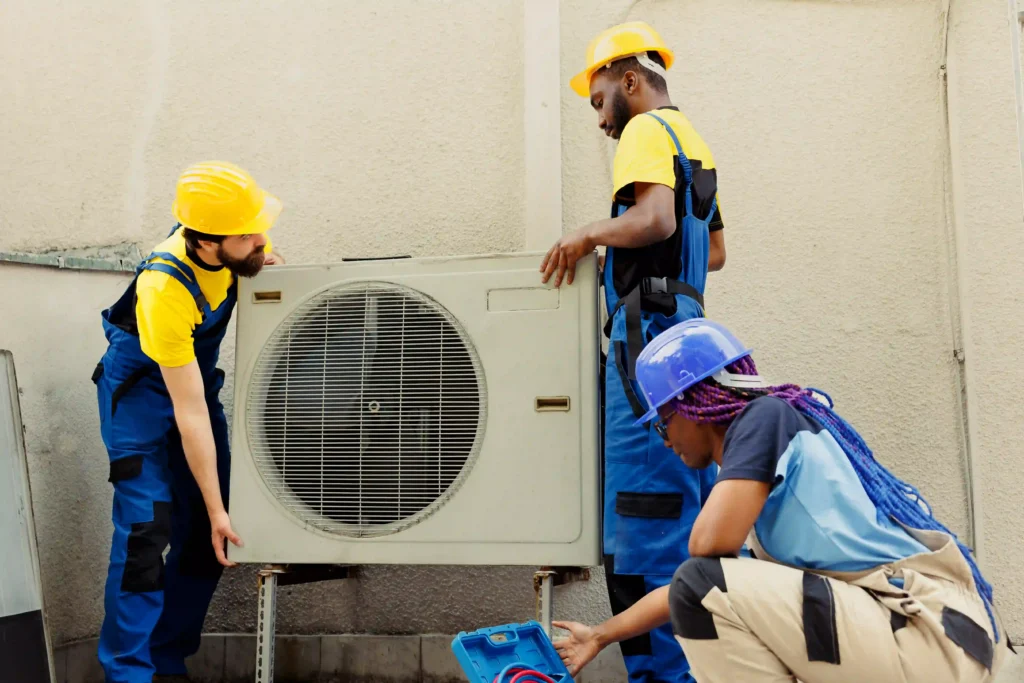
3. Inspect the Outdoor Unit
The indoor unit is the part you see every day.
But effective air conditioning also depends heavily on the outdoor unit.
It needs to release heat from inside your room into the outdoor environment.
Over time, the outdoor unit can collect:
- Dust
- Leaves
- Dirt
- Construction debris
- Objects that restrict ventilation
Daikin advises keeping the area around the outdoor unit clear so that airflow is not obstructed. It notes that restricted airflow around the unit can increase system load and electricity consumption.
Before summer, check whether anything has been stored around the outdoor condenser during the months when the AC was not being used.
Do not cover or tightly surround the unit while operating it.
4. Check the AC Drain Pipe Before It Starts Leaking Indoors
An air conditioner removes moisture from indoor air while cooling.
That water should travel through the condensate drain system and discharge outside.
If the drain becomes blocked, water can begin leaking from the indoor unit.
Typical warning signs include:
- Water dripping from the AC
- Damp wall below the unit
- Musty smell
- Water collecting inside the indoor unit
- Little or no drainage from the external drain pipe
Cleaning and checking the drainage system before heavy AC use can help identify a partial blockage before it becomes an indoor water-leakage problem.
Daikin specifically notes that filter and drainage problems can contribute to condensate leakage and recommends appropriate maintenance when this occurs.
5. Don’t Automatically Ask for an AC Gas Refill
This mistake is extremely common.
You switch on your AC after several months.
Cooling feels weak.
The immediate conclusion is:
“Gas bharvani hase.”
Not necessarily.
Poor cooling may come from:
- Dirty filters
- Dirty coils
- Restricted airflow
- Outdoor-unit problems
- Refrigerant leakage
- Electrical faults
- Compressor-related problems
A professional technician should first determine whether refrigerant is actually low.
If the AC needs refrigerant repeatedly, the system should be checked for a potential leak rather than simply receiving another temporary top-up.
G-Aircon’s AC servicing in Vadodara includes maintenance and repair checks, with refrigerant-related servicing performed where required.
6. Check for Unusual AC Noise
If you haven’t used your AC for months, listen carefully when restarting it.
A normal AC will make some operating sounds.
But newly appearing sounds such as:
- Strong rattling
- Grinding
- Repeated clicking
- Excessive vibration
- Abnormal outdoor-unit noise
deserve attention.
Possible causes range from loose components to fan, motor or electrical issues.
The important question is whether the noise is different from the way the AC normally operates.
If it is, mention this during servicing rather than waiting for the problem to worsen.
7. Check Whether the AC Smells When You Switch It On
A musty or unpleasant smell from the indoor AC may indicate accumulated dirt or moisture around areas such as:
- Filter
- Cooling coil
- Blower
- Drain pan
- Condensate system
Cleaning only the outer panel will not necessarily solve odours coming from deeper inside the unit.
If the smell returns even after filter cleaning, a more thorough inspection or AC deep cleaning may be needed.
G-Aircon offers both routine AC servicing and specialised jet-pump AC cleaning in Vadodara for systems requiring deeper cleaning.
8. Test the AC Before You Need It All Day
Don’t make the first real test of your AC a day when you intend to operate it continuously.
Run it beforehand.
Check:
- Cooling
- Airflow
- Drainage
- Indoor-unit noise
- Outdoor-unit operation
- Remote controls
- Temperature response
This gives you time to arrange servicing or repair if something is wrong.
A small maintenance issue is considerably less inconvenient when discovered before peak use.
Should You Service an AC Even If It Is Cooling Properly?
Possibly, depending on its maintenance history and condition.
An AC can still cool while gradually becoming dirty.
For example, the unit may:
- Take slightly longer to cool
- Have weaker airflow
- Run for longer periods
- Accumulate dirt internally
Routine maintenance is intended to keep components operating under cleaner and more normal conditions rather than waiting for total failure.
The U.S. Department of Energy notes that replacing or cleaning clogged filters is an important maintenance measure because clogged filters affect the AC’s ability to absorb heat.
However, this does not mean an AC needs every possible paid service simply because summer is approaching.
The type of maintenance should reflect the actual condition of the system.
Normal AC Service or Deep Cleaning Before Summer?
Not every AC needs the same treatment.
Normal AC servicing may be suitable when:
- AC is relatively clean
- Cooling remains good
- Airflow is normal
- No major smell is present
- Drainage works correctly
- The unit has been maintained regularly
Deep cleaning may be worth considering when:
- Coil is heavily dirty
- Blower contains visible buildup
- Airflow remains weak after filter cleaning
- Bad smell returns
- Drainage repeatedly blocks
- AC has had long periods of heavy use
- The unit operates in a dusty environment
G-Aircon offers both regular AC service and jet pump AC service in Vadodara, allowing the type of cleaning to be selected according to the AC’s condition.
Deep cleaning should be used because the AC needs it, not simply because the package sounds more premium.
What Should a Pre-Summer AC Service Include?
The exact process depends on the AC model and condition, but a useful inspection may include checking:
Air Filters
Filters should be inspected and cleaned when dirty.
Indoor Coil
The evaporator area can be checked for dirt that may restrict heat transfer or airflow.
Blower and Airflow
The technician can determine whether airflow from the indoor unit is normal.
Outdoor Condenser
Dirt and obstruction around the outdoor unit should be assessed.
Drainage System
The condensate drain should allow water to flow freely outside.
Refrigerant-Related Performance
If cooling symptoms suggest a refrigerant problem, the system can be investigated.
Electrical Components
Connections and operating components may be inspected for obvious faults.
Cooling Performance
Finally, the AC should be operated to confirm that cooling, airflow and drainage are functioning correctly.
G-Aircon states that its AC servicing offering in Vadodara covers servicing, maintenance and repair across AC systems.
Can Pre-Summer Servicing Reduce Electricity Bills?
It can help when maintenance problems are causing the AC to operate inefficiently.
For example:
Dirty filter → reduced airflow → AC works harder
Dirty heat exchanger → poorer heat transfer → longer runtime
Blocked outdoor airflow → increased system load
The Department of Energy states that neglecting routine maintenance can lead to poor performance and excessive energy use.
Daikin similarly explains that blocked filters increase the electricity required to cool a room.
But avoid unrealistic claims such as:
“Service your AC and save exactly 30% on your electricity bill.”
No fixed saving applies to every AC.
Actual electricity consumption also depends on:
- Daily operating hours
- Temperature setting
- Room size
- Sun exposure
- Outdoor temperature
- AC efficiency
- Equipment age
- Occupancy
Servicing helps maintain the system. It does not override how the AC is used.
7 Warning Signs You Should Service Your AC Before Summer
Don’t wait for complete failure if you notice:
- Cooling is weaker than last season
- Airflow is low
- AC gives an unpleasant smell
- Water drips from the indoor unit
- AC makes a new or unusual noise
- The room takes much longer to cool
- The AC previously had refrigerant or repair problems
These symptoms indicate that an inspection is more useful than simply switching the AC on and hoping it performs normally throughout the season.
What If Your AC Was Serviced Recently?
If it was professionally serviced recently and is:
- Cooling properly
- Clean
- Draining normally
- Producing normal airflow
- Showing no unusual behaviour
there may be no reason to pay for another unnecessary full service simply because summer is approaching.
You can still:
- Check accessible filters
- Test cooling
- Inspect the outdoor-unit surroundings
- Watch for leakage or unusual sounds
Maintenance should solve or prevent meaningful problems, not become a ritual where you pay for unnecessary work.
What If the AC Hasn’t Been Used for 6 Months?
Before regular use resumes:
Check the filters.
Inspect the outdoor unit.
Run the AC for a test period.
Check whether cooling is normal.
Observe the drain outlet.
Listen for unusual sounds.
If anything appears abnormal, arrange professional servicing.
The longer the AC has been unused, the more useful this basic inspection becomes.
Should You Wait Until Your AC Stops Cooling?
No.
Complete cooling failure is usually the worst time to begin thinking about maintenance.
Many AC problems show smaller warning signs first:
Cooling slows down
→ AC runs longer
→ airflow becomes weaker
→ noise or leakage appears
→ cooling becomes significantly worse
Not every breakdown follows this pattern, but waiting until a system completely stops working removes the opportunity to address developing maintenance issues early.
AC Service Before Summer in Akota, Alkapuri, Gotri & Vasna-Bhayli
For customers searching for AC service near me in Vadodara, G-Aircon provides repair, servicing, installation and maintenance across the city.
Pre-summer servicing can be targeted naturally to residential and commercial customers in areas including:
- Akota
- Alkapuri
- Gotri
- Vasna
- Bhayli
- Sevasi
- Atladra
- and nearby Vadodara areas
The important SEO point is to keep these areas within genuinely useful local content rather than repeating phrases such as “best AC service Gotri” or “AC technician Akota” throughout every paragraph.
That gives the blog local relevance without obvious keyword stuffing.
When Do You Need AC Repair Instead of Servicing?
Servicing mainly deals with maintenance.
Repair deals with an actual fault.
Servicing may help with:
- Dirty filters
- Dirty coils
- Drain cleaning
- General maintenance
- Reduced performance caused by dirt
Repair may be needed for:
- Refrigerant leakage
- Compressor faults
- Motor problems
- PCB faults
- Electrical issues
- Broken sensors
- Damaged components
If the AC has stopped cooling altogether or is showing a clear technical fault, asking only for “AC service” may not address the actual issue.
G-Aircon provides both AC servicing and AC repair in Vadodara, allowing technicians to address maintenance issues as well as technical faults.
Don’t Wait for the First Hot Day to Discover Your AC Isn’t Ready
The best time to think about AC servicing is not when you’re already uncomfortable and the unit has stopped working.
Check it before heavy usage begins.
A sensible pre-summer process is:
Clean filters → inspect the system → test cooling → check drainage → check outdoor unit → repair problems if identified.
If everything works normally, great.
If not, you’ve discovered the problem before depending on the AC every day.
For homeowners and businesses looking for AC servicing in Vadodara, G-Aircon offers AC maintenance, repair, installation and deep-cleaning services across the city.
Contact G-Aircon:
+91 95589 01793
About Us
Welcome to G – Aircon, your trusted partner for all your air conditioning needs. With years of experience and a commitment to excellence, we are proud to be a leading provider of AC services in Vadodara.
Links
Our Services
Contact Info
- D - 18, Sarawati Nagar, B/H Roses Garden, Old Chhani Road, Vadodara - 390002
- Sameer Khan: +91 95589 01793
- info@g-aircon.com