-
info@g-aircon.com
-
Open 24 hours
-
Home
Moving into a new home involves packing furniture, electronics, appliances and dozens of smaller belongings.
But one appliance should not simply be unplugged, packed and transported like a television or refrigerator: your split AC.
A split air conditioner consists of an indoor unit and an outdoor unit connected through refrigerant piping, electrical wiring and drainage components. Carrier explains that ductless split installation requires correct mounting of both units and proper connection of refrigerant lines, electrical wiring and condensate drainage.
That means shifting an AC involves much more than removing two units from the wall.
Improper dismantling or reinstallation can result in:
- Refrigerant loss
- Poor cooling
- Water leakage
- Damaged copper piping
- Excessive vibration
- Drainage problems
- Electrical faults
- Additional repair expenses
If you are moving between Bhayli, Gotri, Atladra, Sevasi, Vasna, Kalali or another part of Vadodara, here is what you should know before relocating your AC.
What Does AC Shifting Actually Include?
A proper AC shifting service in Vadodara generally involves several separate stages:
Dismantling → preparing components → transportation → selecting the new location → reinstallation → testing
G-Aircon provides a dedicated AC shifting service in Vadodara in addition to AC installation and fitting services.
For a split AC, the technician needs to deal with:
- Indoor unit
- Outdoor condenser unit
- Copper refrigerant piping
- Drain pipe
- Electrical connections
- Mounting plate
- Outdoor brackets or stand
- Insulation
- Interconnecting cable
Some parts may be reusable, while others may need replacement depending on their condition and the layout of the new property.
1. Don’t Remove a Split AC Like a Normal Appliance
A window AC and split AC are not dismantled in the same way.
With a split AC, the indoor and outdoor units remain connected through the refrigeration circuit.
Simply disconnecting the copper pipes without following the appropriate procedure can allow refrigerant to escape.
The technician therefore needs to shut down and disconnect the system properly before removing the units.
Refrigerant handling should be left to trained technicians rather than attempted as a DIY moving task.
Why does this matter?
Because once the AC reaches the new home, losing refrigerant during dismantling can mean:
- Poor cooling
- Additional refrigerant work
- More installation time
- Extra expense
Professional shifting should focus on preserving the system rather than simply getting it off the wall quickly.
2. Inspect the AC Before You Shift It
If your AC already has a problem, relocating it will not magically fix it.
Before dismantling, it is useful to know whether the system currently:
- Cools properly
- Has refrigerant leakage
- Leaks water indoors
- Makes unusual noise
- Has damaged piping
- Has electrical problems
- Requires servicing
This creates a baseline.
If the AC was cooling properly before shifting but performs poorly immediately after reinstallation, the technician knows the problem may be related to the relocation or new installation.
If the system already had weak cooling beforehand, that issue should not automatically be blamed on shifting.
A basic inspection before dismantling can therefore prevent confusion later.
3. Refrigerant Handling Is One of the Most Important Parts of AC Shifting
One of the biggest concerns during AC shifting is the refrigeration system.
The copper lines connecting the indoor and outdoor units contain refrigerant during operation.
Carrier’s installation guidance notes that mini-split systems require precise refrigerant-line connections for correct and reliable operation.
If piping is opened carelessly, refrigerant can escape.
This is why customers should avoid using untrained movers to disconnect a split AC simply because they are already shifting the rest of the household.
Furniture movers can move the packaged unit.
A trained AC technician should handle the HVAC dismantling and reinstallation.
4. Copper Pipes Need Careful Handling
Copper refrigerant lines may look simple, but they are an important part of the cooling system.
During shifting they can be:
- Bent
- Crushed
- Kinked
- Contaminated
- Damaged at connection points
Carrier’s technical installation guidance emphasises appropriate refrigerant-grade tubing and correct handling of refrigeration piping during installation.
A severely damaged pipe should not simply be straightened and reused without checking its condition.
The technician should determine whether the existing pipe can be reused safely or whether new piping is more appropriate.
5. Don’t Assume the Old Copper Pipe Will Fit the New Home
Your old property may have had the indoor and outdoor units only a short distance apart.
Your new property may require:
- A longer pipe route
- A different wall penetration
- A different outdoor-unit location
- Additional bends
- A different drainage route
So even if the existing copper pipe is in good condition, it may not be the correct length for the new installation.
Trying to force an old piping layout onto a completely different room can result in a poor installation.
The new property should be assessed first.
6. Choosing the Correct Indoor Unit Location Matters
Many homeowners choose the AC location based only on appearance:
“Put it above the bed.”
or
“Install it wherever the old owner already made a hole.”
That isn’t always the best approach.
Carrier advises selecting an indoor-unit position that allows effective air circulation through the room, access to the air filter, practical connections to the outdoor unit and suitable condensate drainage.
A good indoor-unit location should therefore consider:
- Air distribution
- Room layout
- Furniture placement
- Access for future servicing
- Drainage
- Connection route to the outdoor unit
A badly positioned AC may cool one part of the room effectively while leaving another area uncomfortable.
7. Outdoor Unit Placement Is Just as Important
The outdoor condenser needs to release the heat removed from your room.
It therefore needs appropriate airflow around it.
Carrier recommends positioning the outdoor unit on a solid, level surface while allowing adequate clearance for airflow.
Avoid treating the outdoor unit as something that can simply be squeezed into any available balcony corner.
The installation should consider:
- Ventilation
- Accessibility
- Structural support
- Vibration
- Drainage where relevant
- Distance from the indoor unit
- Manufacturer clearance requirements
Poor outdoor-unit placement can make future servicing difficult and may interfere with normal operation.
8. Drain Pipe Slope Can Prevent Future Water Leakage
This is one of the most important details during reinstallation.
As the AC cools indoor air, moisture condenses and needs to drain outside.
The drain pipe should therefore be routed so that water can flow correctly.
Carrier notes that one factor in selecting mini-split placement is allowing gravity-fed condensate drainage.
If the drain pipe has:
- Incorrect slope
- Upward sections
- Kinks
- Blockage
- Poor connections
water may start returning toward the indoor unit.
The result can be:
AC working perfectly + water dripping down your new wall.
This is why AC shifting should not end once the unit starts blowing cold air.
Drainage should also be tested.
9. Check the Mounting Plate and Outdoor Brackets
The indoor unit needs a secure mounting plate.
The outdoor unit also needs suitable structural support.
When moving to a different home, do not assume every old bracket, screw or fitting should automatically be reused.
The technician should check whether:
- Indoor mounting plate is secure
- Wall material is suitable
- Outdoor bracket is structurally sound
- Fasteners are appropriate
- Unit is properly positioned
- Excessive vibration is present
An unstable mounting arrangement can create noise and vibration even when the AC itself is mechanically healthy.
10. Protect Both AC Units During Transportation
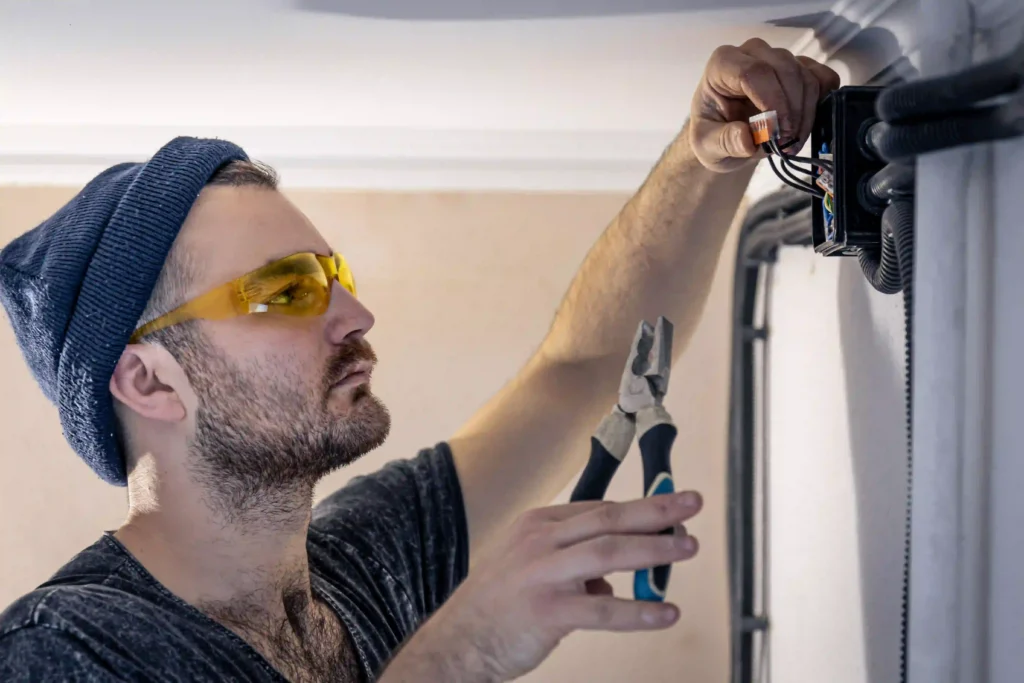
Once dismantled, both units need to be transported carefully.
The outdoor unit contains major refrigeration components, while the indoor unit includes the coil, blower, electronics and drain assembly.
During transportation:
- Protect units from impact
- Avoid crushing piping connections
- Prevent exposed pipe openings from collecting dirt
- Do not place heavy household items on top of the AC
- Keep smaller parts together
- Protect remote controls and mounting components
A careless journey can undo careful dismantling.
The safest approach is to package the equipment before general household loading begins.
Should You Clean the AC While It Is Being Shifted?
Sometimes, yes.
Shifting creates a useful opportunity to inspect the unit.
If the AC has:
- Dirty filters
- Heavy dust
- Dirty coil
- Dirty blower
- Drain buildup
servicing it before or during reinstallation can make sense.
But don’t automatically pay for deep cleaning just because the AC has been removed.
If the system is already clean, unnecessary cleaning adds little value.
G-Aircon provides both standard AC servicing and specialised jet-pump cleaning in Vadodara, so cleaning can be selected according to the actual condition of the unit.
Do You Need AC Gas Refill After Shifting?
Not automatically.
This is another common misconception.
A correctly handled system should not require gas simply because it moved from one house to another.
Refrigerant may need attention if:
- Refrigerant was lost during dismantling
- Leakage exists
- New piping changes require system work
- The previous charge was already incorrect
- A repair has opened the refrigeration circuit
So don’t accept this logic without diagnosis:
“AC shift hua hai, isliye gas toh bharni padegi.”
Whether refrigerant work is required should be determined from the system’s condition and installation process.
Why Vacuuming Can Matter During Reinstallation
When the refrigeration circuit has been opened during installation work, unwanted air and moisture should not simply remain inside the system.
Professional installation procedures can therefore include evacuation before the system is placed back into normal operation.
Carrier’s installation documentation includes refrigerant tubing connection and evacuation as part of installation procedures for applicable AC systems.
The exact procedure should follow the requirements of the particular AC manufacturer and model.
This is another reason AC reinstallation is not merely:
connect pipe → tighten nut → switch on.
Can Old AC Pipes Be Reused?
Sometimes yes.
Sometimes no.
The decision depends on:
- Pipe condition
- Correct size
- Required new length
- Existing insulation
- Damage or kinks
- Contamination
- Refrigerant/system requirements
Reusing suitable piping can avoid unnecessary replacement.
But forcing damaged or inappropriate piping into the new installation merely to reduce cost can create future problems.
The technician should inspect it before deciding.
Should You Install the AC in the Same Position as the Previous Owner’s AC?
Only if that location is actually appropriate.
Existing holes can make installation easier, but convenience should not override:
- Air circulation
- Drainage
- Outdoor-unit placement
- Pipe route
- Service access
- Room cooling requirements
Carrier’s mini-split placement guidance emphasises airflow, access, drainage and outdoor-unit positioning rather than simply using the easiest wall.
Sometimes using an existing opening makes perfect sense.
Sometimes a different position gives a better long-term installation.
AC Shifting From One Room to Another in the Same House
You don’t need to change homes to require AC shifting.
People may relocate an AC because:
- Bedroom becomes a study
- Child moves to another room
- House is renovated
- Office layout changes
- AC capacity is better suited elsewhere
- Furniture blocks airflow
- New interior design changes the wall arrangement
Even within the same property, the process still requires correct dismantling, piping, drainage and reinstallation.
The distance may be shorter, but the technical requirements remain.
Moving From Gotri to Bhayli? Or Manjalpur to Atladra?
For local moving searches, this is where the blog can target Vadodara naturally.
For example, someone moving:
Gotri → Bhayli
Vasna → Sevasi
Manjalpur → Atladra
Makarpura → Kalali
may need the AC removed at one address and installed at another.
G-Aircon provides dedicated AC shifting services across Vadodara, alongside installation and fitting services.
Its current website also lists locality-specific service coverage, including areas such as Kalali and Waghodia Road where shifting is included among available AC services.
This is far better for local SEO than repeating “AC shifting service Vadodara” unnaturally twenty times.
Common Mistakes During AC Shifting
Mistake 1: Asking general movers to dismantle the AC
Transport companies are useful for furniture and household belongings, but refrigeration work needs HVAC knowledge.
Mistake 2: Cutting or bending copper piping carelessly
Damaged piping can create installation and refrigeration problems.
Mistake 3: Assuming gas refill is always required
It should depend on refrigerant condition and whether gas was lost.
Mistake 4: Installing the outdoor unit wherever space is available
Airflow and structural support matter.
Mistake 5: Ignoring drain-pipe slope
Poor drainage can lead to indoor water leakage.
Mistake 6: Not testing the AC after installation
Cooling alone should not be the only check.
Mistake 7: Reusing every old component automatically
Some pipes, insulation, brackets or fittings may be damaged or unsuitable for the new location.
What Should Be Checked After AC Reinstallation?
Once the AC is installed in the new home, don’t immediately consider the job complete.
The technician should operate the unit and verify important functions.
Cooling
Does the AC produce adequate cooling?
Airflow
Is the indoor airflow normal?
Drainage
Is condensate flowing correctly outside?
Refrigerant Connections
Are connections secure and operating normally?
Noise and Vibration
Has installation created new rattling or excessive vibration?
Indoor Unit
Is it mounted securely?
Outdoor Unit
Is it stable and receiving sufficient airflow?
Electrical Operation
Does the unit start, respond and operate correctly?
Carrier’s installation guidance similarly treats commissioning and system checks as an important part of professional AC installation rather than ending the job at physical mounting.
Can Incorrect Reinstallation Cause Water Leakage?
Yes.
Improper installation is one possible cause of mini-split water leakage, particularly when condensate drainage is not correctly arranged.
If your AC never leaked at the old home but starts dripping shortly after shifting, ask the technician to check:
- Indoor-unit alignment
- Drain hose connection
- Drain-pipe slope
- Drain blockage
- Drain tray
Don’t immediately assume the AC itself is damaged.
The installation may be the issue.
Can Incorrect AC Shifting Reduce Cooling?
Yes, if the relocation results in refrigerant loss, damaged piping, poor connections, unsuitable outdoor-unit placement or other installation problems.
Carrier notes that refrigerant-line issues can reduce cooling performance, while appropriate installation is important for system efficiency and long-term reliability.
If cooling drops immediately after relocation, the installer should recheck the work before blaming the age of the AC.
Should You Repair or Replace an Old AC Before Shifting?
This deserves a practical decision rather than an automatic answer.
Suppose an old AC already has:
- Frequent refrigerant leakage
- Major compressor problems
- Recurring PCB faults
- Significant corrosion
- High repair costs
- Poor cooling
Paying to dismantle it, transport it, reinstall it and then repair it again may not be financially sensible.
On the other hand, an older AC that still works reliably may be perfectly reasonable to shift.
Before relocating a problematic unit, ask:
What will shifting cost?
What repairs are already needed?
How old is the AC?
Is the new room suitable for its capacity?
Would replacement make more sense?
Don’t spend money moving a machine that is already close to being uneconomical to repair.
AC Shifting Service in Bhayli, Gotri, Atladra, Sevasi & Vasna
G-Aircon currently provides dedicated AC shifting, installation and fitting services in Vadodara for different AC brands and models.
For people relocating homes, offices or individual AC units, local targeting can naturally include:
- Bhayli
- Gotri
- Vasna
- Atladra
- Sevasi
- Kalali
- Akota
- Manjalpur
- Makarpura
- and nearby Vadodara areas
G-Aircon operates from Makarpura, Vadodara, and its current contact page lists +91 95589 01793 and 24-hour availability.
A Safe AC Shift Is More Than Moving Two Units
The easiest part of AC shifting is transporting the indoor and outdoor units from one address to another.
The technical work happens before and after the journey.
A proper process looks more like:
Inspect existing AC
→ dismantle correctly
→ protect piping and equipment
→ transport safely
→ select suitable new locations
→ install indoor and outdoor units securely
→ connect refrigerant, drainage and electrical systems
→ test cooling, drainage, noise and operation
That process helps reduce the chances of turning a perfectly functioning AC into a repair job immediately after moving.
If you are relocating within Vadodara, arrange AC dismantling and reinstallation as a separate technical part of your moving plan rather than leaving it until the movers arrive.
For AC shifting service in Vadodara, G-Aircon provides AC shifting, fitting, installation, servicing and repair across the city.
Contact G-Aircon:
+91 95589 01793
Business Hours
Open 24 hours
About Us
Welcome to G – Aircon, your trusted partner for all your air conditioning needs. With years of experience and a commitment to excellence, we are proud to be a leading provider of AC services in Vadodara.
Links
Our Services
Contact Info
-
D – 18, Sarawati Nagar, B/H Roses Garden, Old Chhani Road, Vadodara – 390002 -
Sameer Khan: +91 95589 01793
-
info@g-aircon.com
Contact Form
© 2024 G – Aircon. All Rights Reserved. Website Design & Development by Taniya Webfix Pvt Ltd